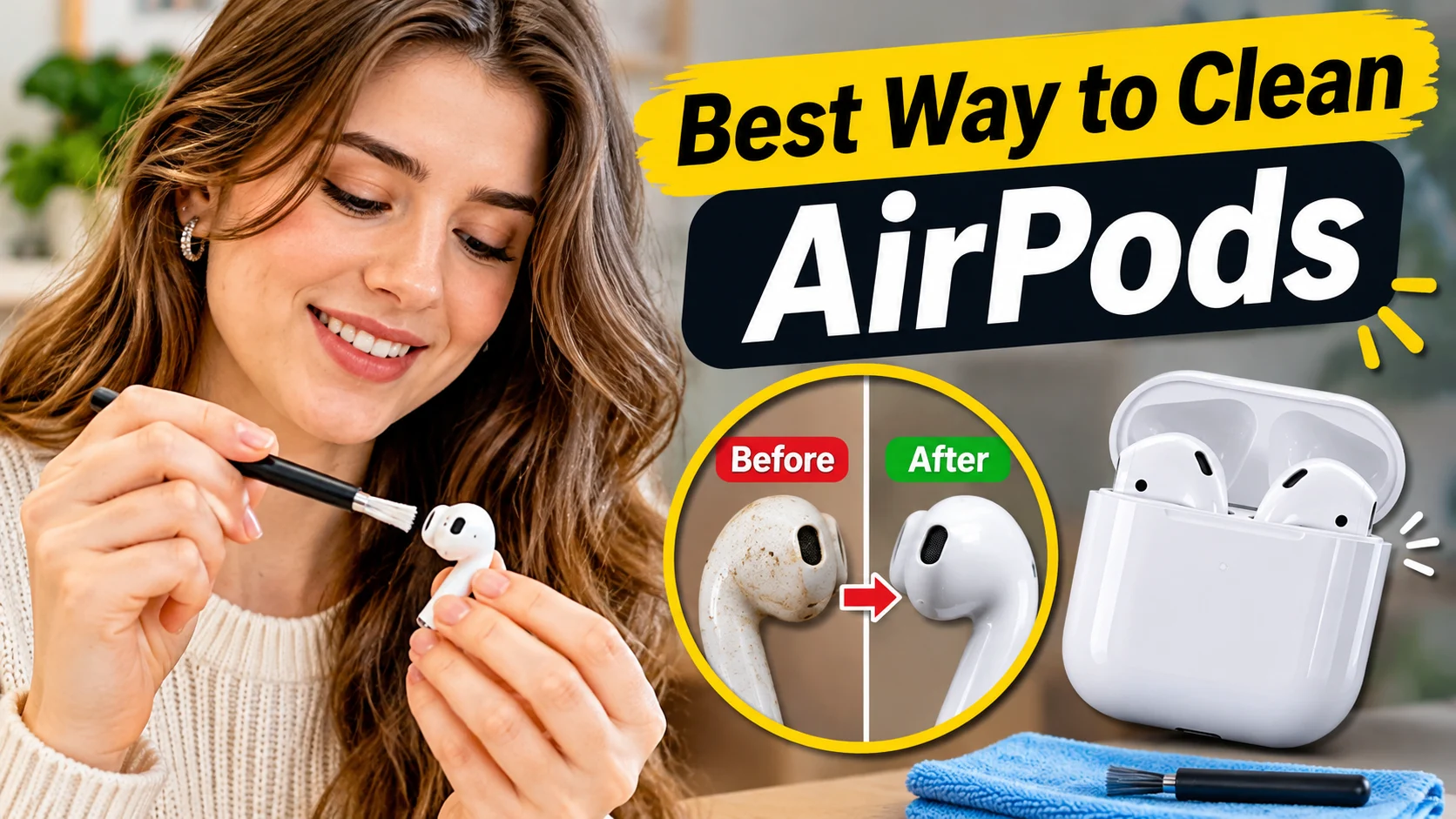
The best way to clean AirPods is to gently wipe their exterior with a soft, dry microfiber cloth and carefully remove loose debris. Avoid sharp objects, excessive moisture, and harsh cleaning products.
AirPods are used every day, but regular use can leave them covered in dust, earwax, fingerprints, and other unwanted particles. Knowing the best way to clean AirPods helps keep them looking fresh and properly maintained.
However, cleaning is not the only useful skill to learn. Understanding different expressions for cleaning, removing dirt, and maintaining electronic devices can also improve your English vocabulary.
In this guide, you’ll discover practical cleaning advice, 10 alternative expressions, natural English examples, professional vocabulary, common mistakes, and useful exercises.
What Does “Best Way to Clean AirPods” Mean?
The phrase “best way to clean AirPods” refers to the safest and most effective method of removing dirt, dust, fingerprints, and accumulated debris from Apple’s wireless earbuds.
It is a search phrase rather than a complete grammatical sentence.
Simple meaning: How can someone clean AirPods properly without damaging them?
Example sentence:
“I’m searching for the best way to clean AirPods because mine have collected dust and earwax.”
Grammar explanation:
- Best: Superlative adjective.
- Way: Noun referring to a method.
- To clean: Infinitive describing an action.
- AirPods: Product name and noun.
How to Clean AirPods Properly
Keeping your AirPods clean does not require complicated equipment. A gentle approach is usually the best starting point.
1. Prepare Your Cleaning Materials
You may need:
- A soft microfiber cloth.
- A clean, dry, soft-bristled brush.
- Cotton swabs for suitable exterior areas.
- A clean workspace.
2. Wipe the Exterior
Gently wipe the outside of your AirPods using a soft, dry cloth.
Avoid applying excessive pressure or pushing dirt into openings.
3. Remove Visible Debris
Carefully remove loose dirt around the speaker openings using an appropriate soft brush.
Do not insert sharp objects into the speaker mesh.
4. Clean the Charging Case
Wipe the outside of the charging case with a clean, dry cloth.
Pay attention to areas where dust and fingerprints collect.
5. Keep Everything Dry
Avoid soaking your AirPods or exposing them to unnecessary moisture.
Always follow the cleaning instructions appropriate for your specific model.
Important: Different AirPods models may have different cleaning requirements. Do not assume that one cleaning method is suitable for every model.
Quick Categories: Different Ways to Describe Cleaning
English has several expressions for describing cleaning and maintenance. The best choice depends on your audience and situation.
Formal Alternatives
These expressions are useful in technical documentation and formal instructions.
- Carry out routine maintenance.
- Clean the exterior surface.
- Remove accumulated debris.
- Maintain electronic equipment.
Pro Tip: Use precise expressions when writing technical instructions.
Professional Alternatives
These expressions work well in offices and workplace communication.
- Maintain your AirPods.
- Remove visible dirt.
- Clean shared equipment.
- Perform regular maintenance.
Pro Tip: Professional language should be clear rather than unnecessarily complicated.
Business Email Alternatives
Use polite and direct expressions when requesting cleaning or maintenance.
- Please clean the exterior surface.
- Kindly maintain the shared equipment.
- Please remove visible debris.
- Ensure the equipment remains clean.
Pro Tip: Add “please” when making a polite workplace request.
Academic Alternatives
These expressions are useful in educational writing and explanations.
- Remove accumulated particles.
- Maintain electronic devices.
- Clean external components.
- Reduce surface contamination.
Pro Tip: Academic vocabulary should describe the action accurately.
Casual Alternatives
These expressions sound natural in everyday conversations.
- Wipe down your AirPods.
- Get rid of the dirt.
- Clean your earbuds.
- Remove the dust.
Pro Tip: Short expressions usually sound more natural in casual conversations.
Informal Expressions
These phrases are suitable for friendly discussions.
- Give your AirPods a quick clean.
- Get the dirt off.
- Wipe them down.
- Clean them up.
Pro Tip: Informal expressions are appropriate with friends, but avoid slang in formal reports.
Other Ways to Say “Best Way to Clean AirPods” With Examples
Here are 10 useful alternatives. They are related expressions, not exact synonyms. Each describes a slightly different cleaning action.
1. Wipe Down Your AirPods
Meaning: Clean the outside using a cloth.
Explanation: “Wipe down” is a common phrasal verb in everyday English. It describes removing dust, fingerprints, and surface dirt.
- Formal: Neutral
- Example Sentence: Wipe down your AirPods with a soft microfiber cloth.
- Best Use: Everyday cleaning
- Avoid Using In: Deep mesh cleaning
- Tone: Natural and practical
- Formality Level: ⭐⭐⭐
- Usage Frequency: Very Common
- CEFR Level: B1
Common Collocations:
- Wipe down surfaces.
- Wipe down equipment.
- Wipe down headphones.
- Wipe down electronics.
Context Examples:
- Spoken English: “I need to wipe down my AirPods.”
- Professional English: “Please wipe down the shared audio equipment.”
- Casual Conversation: “I usually wipe down my earbuds after exercising.”
2. Remove Dirt From Your AirPods
Meaning: Get rid of visible dirt and unwanted particles.
Explanation: This expression is simple and direct. It works particularly well in beginner-friendly instructions.
- Formal: Neutral
- Example Sentence: Remove dirt from your AirPods using an appropriate soft brush.
- Best Use: Basic instructions
- Avoid Using In: Detailed technical reports
- Tone: Clear and direct
- Formality Level: ⭐⭐⭐
- Usage Frequency: Very Common
- CEFR Level: B1
Common Collocations:
- Remove dirt.
- Remove dust.
- Remove debris.
- Remove stains.
Context Examples:
- Spoken English: “How can I remove dirt from my earbuds?”
- Professional English: “Remove visible dirt before storing the equipment.”
- Casual Conversation: “I need to get the dirt off my headphones.”
3. Clean the Speaker Mesh
Meaning: Remove accumulated debris from the protective speaker mesh.
Explanation: This expression is more technical and specific. It is particularly useful when explaining how to care for delicate earbud components.
- Formal: Professional
- Example Sentence: Clean the speaker mesh carefully according to the recommended instructions.
- Best Use: Technical instructions
- Avoid Using In: General surface cleaning
- Tone: Technical and precise
- Formality Level: ⭐⭐⭐⭐
- Usage Frequency: Common
- CEFR Level: B2
Common Collocations:
- Speaker mesh.
- Protective mesh.
- Mesh cleaning.
- Speaker opening.
Context Examples:
- Spoken English: “The speaker mesh looks dirty.”
- Professional English: “Inspect the speaker mesh for visible debris.”
- Casual Conversation: “I think there’s dirt around the speaker mesh.”
4. Remove Earwax Buildup
Meaning: Get rid of accumulated earwax.
Explanation: This phrase identifies a specific type of residue that can collect around earbuds. It is more descriptive than simply saying “clean your headphones.”
- Formal: Neutral
- Example Sentence: Check the earbuds for earwax buildup before cleaning.
- Best Use: Earbud hygiene
- Avoid Using In: General dust removal
- Tone: Descriptive and practical
- Formality Level: ⭐⭐⭐
- Usage Frequency: Common
- CEFR Level: B2
Common Collocations:
- Earwax buildup.
- Remove earwax.
- Earwax residue.
- Excessive buildup.
Context Examples:
- Spoken English: “There is some earwax buildup on my earbuds.”
- Professional English: “Inspect the earbuds for visible earwax residue.”
- Casual Conversation: “I need to remove the earwax from my headphones.”
5. Clean the Exterior Surface
Meaning: Remove dirt and fingerprints from the outside of a device.
Explanation: This phrase sounds more professional than “wipe it off.” It works well in product instructions and technical explanations.
- Formal: Professional
- Example Sentence: Clean the exterior surface with a soft, dry cloth.
- Best Use: Product instructions
- Avoid Using In: Internal components
- Tone: Professional and precise
- Formality Level: ⭐⭐⭐⭐
- Usage Frequency: Common
- CEFR Level: B2
Common Collocations:
- Exterior surface.
- Surface cleaning.
- Exterior maintenance.
- Surface residue.
Context Examples:
- Spoken English: “The outside needs a quick clean.”
- Professional English: “Clean the exterior surface before storing the device.”
- Casual Conversation: “I cleaned the outside of my AirPods.”
Native Speaker Tip: Alternatives 1–5
The most natural expression for everyday conversations is “wipe down your AirPods.”
For professional instructions, “clean the exterior surface” sounds more precise.
“Remove earwax buildup” is useful when discussing a specific type of residue.
Native English speakers generally prefer simple expressions when the meaning is already clear.
6. Maintain Your AirPods
Meaning: Keep your AirPods in good condition through regular care.
Explanation: Maintain is broader than clean. It includes cleaning, checking, storing, and looking after electronic devices.
- Formal: Professional
- Example Sentence: Maintain your AirPods regularly to keep them in good condition.
- Best Use: Long-term care
- Avoid Using In: One-time cleaning
- Tone: Professional and informative
- Formality Level: ⭐⭐⭐⭐
- Usage Frequency: Very Common
- CEFR Level: B2
Common Collocations:
- Maintain equipment.
- Regular maintenance.
- Maintain performance.
- Proper maintenance.
Context Examples:
- Spoken English: “I try to maintain my electronics properly.”
- Professional English: “Employees should maintain shared electronic equipment.”
- Casual Conversation: “I want to maintain my AirPods better.”
7. Remove Surface Debris
Meaning: Get rid of loose particles found on a surface.
Explanation: This expression is useful in technical writing. It sounds more precise than simply saying “remove dirt.”
- Formal: Professional
- Example Sentence: Remove surface debris using an appropriate dry brush.
- Best Use: Technical instructions
- Avoid Using In: Deep stains
- Tone: Technical and neutral
- Formality Level: ⭐⭐⭐⭐
- Usage Frequency: Common
- CEFR Level: C1
Common Collocations:
- Surface debris.
- Loose debris.
- Remove particles.
- Dust accumulation.
Context Examples:
- Spoken English: “There is some debris around the opening.”
- Professional English: “Remove surface debris before inspecting the device.”
- Casual Conversation: “I brushed off the dust.”
8. Disinfect the Exterior
Meaning: Use an appropriate method to reduce microorganisms on an object’s outer surface.
Explanation: Disinfect is not the same as clean. Cleaning removes dirt, while disinfecting targets microorganisms.
- Formal: Formal
- Example Sentence: Follow the recommended instructions before disinfecting the device exterior.
- Best Use: Hygiene procedures
- Avoid Using In: Speaker mesh without approval
- Tone: Scientific and formal
- Formality Level: ⭐⭐⭐⭐⭐
- Usage Frequency: Common
- CEFR Level: C1
Common Collocations:
- Disinfect surfaces.
- Disinfect equipment.
- Disinfect the exterior.
- Disinfection procedure.
Context Examples:
- Spoken English: “Can I disinfect the outside of these earbuds?”
- Professional English: “Use approved methods for disinfecting shared equipment.”
- Casual Conversation: “I want to disinfect my headphones.”
9. Carry Out Routine Maintenance
Meaning: Perform regular activities to keep equipment in good condition.
Explanation: This expression is common in professional and technical English. It describes an ongoing process rather than one cleaning action.
- Formal: Formal
- Example Sentence: Carry out routine maintenance to keep electronic equipment in good condition.
- Best Use: Maintenance documentation
- Avoid Using In: Quick conversations
- Tone: Formal and technical
- Formality Level: ⭐⭐⭐⭐⭐
- Usage Frequency: Common
- CEFR Level: C1
Common Collocations:
- Routine maintenance.
- Carry out inspections.
- Maintenance schedule.
- Preventive maintenance.
Context Examples:
- Spoken English: “I clean my earbuds regularly.”
- Professional English: “Carry out routine maintenance according to the recommended procedure.”
- Casual Conversation: “I give my AirPods a regular check.”
10. Restore Your AirPods to a Clean Condition
Meaning: Return a dirty device to a clean state.
Explanation: This is a descriptive expression rather than a common everyday phrase. It is more appropriate for detailed explanations.
- Formal: Formal
- Example Sentence: Follow the recommended procedure to restore your AirPods to a clean condition.
- Best Use: Detailed explanations
- Avoid Using In: Casual messages
- Tone: Formal and descriptive
- Formality Level: ⭐⭐⭐⭐
- Usage Frequency: Occasional
- CEFR Level: C1
Common Collocations:
- Restore cleanliness.
- Clean condition.
- Proper condition.
- Restore to condition.
Context Examples:
- Spoken English: “I want to get my AirPods looking clean again.”
- Professional English: “The procedure helps restore the device to a clean condition.”
- Casual Conversation: “I want my earbuds looking new again.”
Native Speaker Tip: Alternatives 6–10
“Maintain your AirPods” is useful when discussing long-term care.
“Carry out routine maintenance” sounds professional and is suitable for technical documentation.
“Restore your AirPods to a clean condition” is less common in everyday conversation. Most native speakers would simply say “clean your AirPods.”
Expert Insight: Choosing the Right Expression
Different situations require different communication styles.
Workplace Communication
Use professional expressions when discussing electronic equipment.
Example:
“Please wipe down the shared headphones after use.”
This sounds natural, clear, and respectful.
Email Writing
Professional emails should communicate instructions without unnecessary complexity.
Example:
“Please ensure that all shared audio equipment is clean and properly maintained.”
Academic English
Academic writing often uses more specific terminology.
Example:
“Regular maintenance helps remove surface debris and preserve the condition of electronic devices.”
Professional Tone
Avoid using complicated vocabulary simply to sound intelligent.
“Clean the exterior with a soft cloth” is often better than a long, complicated instruction.
Quick Recap: Best Alternatives
| Category | Best Expression |
|---|---|
| Best Professional Choice | Maintain your AirPods |
| Best Casual Choice | Wipe down your AirPods |
| Best Formal Choice | Carry out routine maintenance |
| Most Natural Choice | Wipe down your AirPods |
| Most Polite Choice | Please clean the exterior surface |
Comparison Table: 10 Alternatives
| Phrase | Tone | Formality | Best Use | Frequency |
|---|---|---|---|---|
| Wipe down | Natural | Neutral | Surface cleaning | Very Common |
| Remove dirt | Direct | Neutral | Basic instructions | Very Common |
| Clean speaker mesh | Technical | Professional | Mesh care | Common |
| Remove earwax buildup | Descriptive | Neutral | Earbud hygiene | Common |
| Clean exterior surface | Professional | Formal | Product guides | Common |
| Maintain AirPods | Professional | Formal | Long-term care | Very Common |
| Remove surface debris | Technical | Professional | Device cleaning | Common |
| Disinfect exterior | Scientific | Formal | Hygiene | Common |
| Carry out routine maintenance | Technical | Formal | Maintenance guides | Common |
| Restore to clean condition | Descriptive | Formal | Detailed explanations | Occasional |
Best Choice: Which Expression Should You Use?
Best Overall
Wipe down your AirPods
It is simple, natural, and easy to understand.
Best Professional
Maintain your AirPods
It communicates regular care and responsibility.
Best Academic
Remove surface debris
It provides precise technical vocabulary.
Best Business Email
Clean the exterior surface
It communicates a clear and specific action.
Best Everyday Conversation
Wipe down your AirPods
It sounds natural and conversational.
Most Natural
Clean your AirPods
Sometimes the original expression is already the best choice.
Most Polite
Please clean the exterior surface.
It makes a clear request without sounding demanding.
Commonly Confused Cleaning Expressions
English learners sometimes use similar cleaning words interchangeably. However, each word communicates a different action.
1. Clean vs. Disinfect
- Clean: Remove visible dirt, dust, and unwanted material.
- Disinfect: Use an appropriate process to reduce microorganisms.
Example: Cleaning your AirPods does not automatically mean disinfecting them.
2. Wipe vs. Scrub
- Wipe: Clean a surface using a cloth.
- Scrub: Clean by rubbing repeatedly, often with greater pressure.
Example: “Wipe the exterior gently” is more appropriate than aggressive scrubbing.
3. Maintain vs. Repair
- Maintain: Keep something in good condition through regular care.
- Repair: Fix something that is damaged.
Example: Cleaning your AirPods is maintenance. Fixing damaged components is repair.
4. Dust vs. Debris
- Dust: Fine, loose particles.
- Debris: General unwanted material or small pieces of waste.
Example: “Remove dust from the case” is more specific than “remove debris from the case.”
5. Dry vs. Clean
- Dry: Remove moisture or allow something to become free of moisture.
- Clean: Remove dirt or unwanted material.
Example: Your AirPods may look clean but still need to dry completely.
Common Mistakes to Avoid
Mistake 1: Using Sharp Objects
Wrong: Scrape the speaker mesh with a needle.
Why incorrect: Sharp objects can damage delicate components.
Correct: Use an appropriate soft-bristled brush.
Example: Carefully remove loose debris without inserting sharp objects.
Mistake 2: Washing AirPods Under Running Water
Wrong: Wash the earbuds under a tap.
Why incorrect: Water can enter openings and damage electronic components.
Correct: Follow the recommended cleaning procedure for your model.
Example: Use an appropriate dry cleaning method for the exterior.
Mistake 3: Using Too Much Pressure
Wrong: Press hard against the speaker mesh.
Why incorrect: Excessive pressure may push debris deeper into openings.
Correct: Clean gently.
Example: Use a soft brush without forcing it against delicate surfaces.
Mistake 4: Confusing Cleaning With Disinfecting
Wrong: Say that wiping always disinfects a device.
Why incorrect: Removing visible dirt and reducing microorganisms are different processes.
Correct: Use each expression according to its actual meaning.
Example: Wiping removes surface dirt, while an approved disinfecting process targets microorganisms.
Mistake 5: Ignoring Drying
Wrong: Store wet earbuds immediately.
Why incorrect: Remaining moisture can create problems for electronic components.
Correct: Allow components to dry completely according to the recommended instructions.
Example: Make sure the device is completely dry before storage.
When Should You Use These Expressions?
Choosing the correct expression depends on your audience and communication situation.
Business Communication
Use professional vocabulary when discussing shared equipment.
Example: “Please maintain the shared electronic equipment properly.”
Emails
Use polite and direct expressions.
Example: “Could you please clean the exterior surface before storing the device?”
Meetings
Choose short expressions that everyone understands.
Example: “We should regularly clean and maintain our devices.”
Presentations
Use precise vocabulary to explain procedures.
Example: “The process involves removing surface debris and cleaning the exterior.”
Academic Writing
Use specific terminology instead of unnecessary conversational language.
Example: “Regular maintenance helps remove accumulated debris from electronic devices.”
Interviews
Use clear vocabulary when discussing personal responsibilities.
Example: “I regularly maintain my electronic devices and follow appropriate care instructions.”
Daily Conversations
Choose familiar expressions.
Example: “I need to wipe down my AirPods because they’ve collected some dust.”
Pros and Cons of Using Different Cleaning Expressions
Pros
- Improved clarity: Specific expressions explain exactly what needs cleaning.
- Better vocabulary: Learning alternatives expands your English vocabulary.
- Professional communication: Technical phrases make instructions more precise.
- Natural conversations: Everyday expressions help you sound more fluent.
- Reduced repetition: Different verbs make writing more interesting.
Cons
- Possible confusion: Some alternatives describe different actions rather than identical meanings.
- Overly formal language: Complicated expressions can sound unnatural in casual conversations.
- Incorrect context: Using “disinfect” when you mean “wipe” changes the meaning.
- Technical misunderstanding: General vocabulary cannot replace model-specific cleaning instructions.
- Unnecessary repetition: Using too many alternatives can make simple instructions difficult to understand.
Scenario Practice: Choose the Right Expression
Test your understanding with these five situations.
Situation 1: Business Meeting
Your colleague has finished using shared audio equipment. You want to make a polite request.
Which phrase would you choose?
A. Destroy the dirt.
B. Please wipe down the shared equipment.
C. Make the equipment wet.
Correct Answer: B
Explanation: “Wipe down” is natural, polite, and appropriate for workplace communication.
Situation 2: Job Interview
The interviewer asks how you look after your electronic devices.
Which phrase would you choose?
A. I maintain my electronic devices regularly.
B. I destroy the dust.
C. I make everything shiny.
Correct Answer: A
Explanation: “Maintain” communicates regular care and responsibility.
Situation 3: Presentation
You are explaining how to remove loose particles from an electronic device.
Which phrase would you choose?
A. Make it beautiful.
B. Remove surface debris.
C. Break the particles.
Correct Answer: B
Explanation: “Remove surface debris” is precise and suitable for technical presentations.
Situation 4: Classroom Discussion
Your teacher asks how to describe removing fingerprints from headphones.
Which phrase would you choose?
A. Repair the headphones.
B. Wipe down the headphones.
C. Replace the headphones.
Correct Answer: B
Explanation: “Wipe down” describes cleaning an exterior surface.
Situation 5: Email Reply
Your manager requests that shared audio equipment be cleaned regularly.
Which phrase would you choose?
A. Make it less dirty.
B. Do something to it.
C. Carry out routine maintenance.
Correct Answer: C
Explanation: This expression is appropriate for formal maintenance instructions.
Mini Quiz: Test Your Cleaning Vocabulary
Question 1: Which expression describes cleaning an outside surface with a cloth?
A. Carry out maintenance.
B. Wipe down.
C. Disinfect.
Question 2: Which word describes regular care to keep a device in good condition?
A. Maintain.
B. Scrub.
C. Repair.
Question 3: Which phrase is most suitable for technical instructions about loose particles?
A. Make it nice.
B. Remove surface debris.
C. Make it shiny.
Question 4: What does disinfect mean?
A. Remove all fingerprints.
B. Reduce microorganisms using an appropriate process.
C. Dry a wet surface.
Question 5: Which expression is most natural in everyday conversation?
A. Restore to a clean condition.
B. Carry out routine maintenance.
C. Wipe down your AirPods.
Answer Key
| Question | Correct Answer |
|---|---|
| 1 | B. Wipe down |
| 2 | A. Maintain |
| 3 | B. Remove surface debris |
| 4 | B. Reduce microorganisms |
| 5 | C. Wipe down your AirPods |
Frequently Asked Questions
1. What is the best way to clean AirPods without damaging them?
Use a soft, dry, lint-free cloth for the exterior and follow appropriate cleaning instructions for other components. Avoid sharp tools, excessive pressure, harsh products, and unnecessary moisture.
2. Can I use rubbing alcohol to clean AirPods?
The suitability of rubbing alcohol depends on the component and model. Avoid applying it indiscriminately, especially around delicate openings. Use only cleaning methods recommended for your particular device.
3. How do I remove earwax from AirPods?
Identify your AirPods model and follow its recommended cleaning procedure. Avoid inserting sharp objects or pushing debris into speaker openings. If buildup remains, consider professional assistance.
4. How often should I clean my AirPods?
Clean your AirPods whenever they accumulate visible dirt, sweat, or residue. Regularly checking the earbuds and charging case helps maintain cleanliness and prevents excessive debris buildup.
5. What should I avoid when cleaning AirPods?
Avoid running them under water, using sharp objects, applying excessive pressure, and exposing delicate components to unnecessary moisture. Always choose a cleaning method suitable for your specific model.
Conclusion
Knowing the best way to clean AirPods involves more than removing visible dirt. It requires understanding suitable cleaning methods, protecting delicate components, and maintaining electronic devices properly. Learning alternative expressions such as “wipe down,” “remove surface debris,” and “maintain your AirPods” also improves vocabulary variety. These phrases help English learners communicate more naturally in everyday conversations, professional emails, and academic writing.
Practice using each expression in sentences related to your daily routine. Focus on meaning, context, and tone instead of simply memorizing synonyms. With consistent practice, you can develop stronger English vocabulary, write more clearly, and communicate with greater confidence.